


Defination of adultism
We are often taught of such a type of parenting as gentle or authoritative style but behind it, less noticed in the shaky modern parenting context, lies the adultism. The traditional power dynamic to the majority of conservative parents is a natural one yet it is this same dynamic that can lead to the separation of a parent and a growing child.
As we embark on the quest to become active parents we should now learn the obstacles to adultism that are not evident so that we develop a home where we respect each other, rather than fear or blind obedience.
The Invisibility of Being biassed
Adultism on an original use is an act of discrimination and consequent systematic discrimination of the youth. It is assumed that it is natural to believe that adults are better than teenagers and children because of their age.
Even though we can simply anticipate ageism when discussing the elderly discrimination, adultism is the opposite way. It manifests itself in the thought process that the views, emotions and the independence of a child are so far lower than those of an grown up. In parent choice many mothers and fathers tend to believe that they are just being the boss when in real sense they may be imposing some form of biasness that is stifling the growth of a child, his or her self-esteem.
Where Did Adultism Come From?
Adultism did not emerge recently, it is already deep rooted in the social systems of the past. Children were traditionally regarded as the property or mini adults, whose primary action was to serve the family or work.
Legal Support: Since time immemorial, the West (and the rest of the world) legal systems had granted unlimited authority in parents. Children were not entitled to any legal rights and status.
Industrial Revolution: The school became the norm, the relationship between the corporate had changed upside down and the power was no longer in the hands of the management. The adults were to command children time, bodies and thoughts.
Transmission of Culture: The general issue that arises with adultism among most parents today is mere repeating the harsh style of parenting that parents experienced. The idea that children are to be heard but not to be seen is a product of the past where children were not allowed to get a voice in their lives.
How is Adultism Used?
Adultism is usually misused as a mechanism of social control both in the domestic as well as in the greater society. This is a usual phenomenon in parenting where an adult is confronted so that the authority is being put to the test. The mature becomes a victim of power-based strategies against active parenting, i.e., dialogue and teaching.
Adultism: another adultism symptom is the parent brushing off the legitimacy of an emotional distress or a serious political matter in an adolescent by stating it is just a stage, or it is hormones. It is used to streamline the process of parenting; it can be much easier to coerce an obedience by saying because I said so than to explain the purpose of a boundary or reach a compromise. Schools and legal systems have been subjected to adultism in explaining why the youths should not be incorporated in decision making, which will have a direct effect on their future.
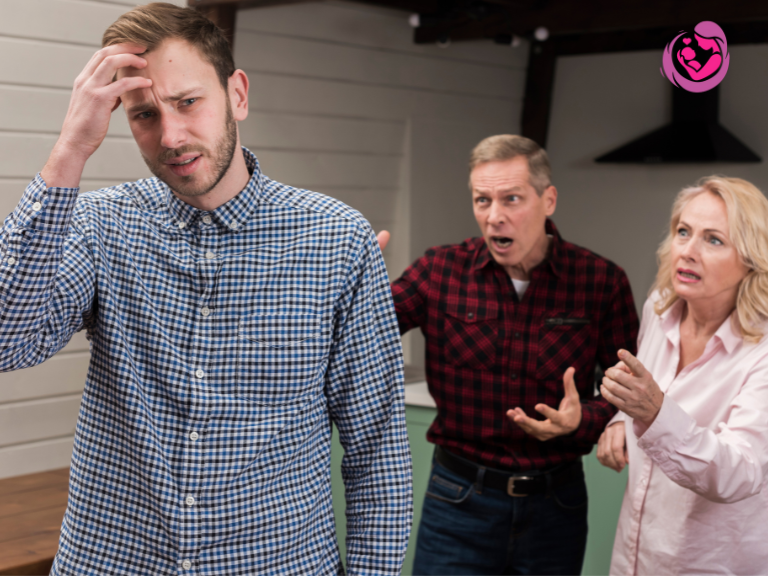
The Problem with Adultism
The biggest issue with the adultist manner of behavior is that it contradicts the intent of most parents that is to produce an assertive, self reliant and moral human being. By bending to comply with adultism, we are committing suicide to adulthood by losing our long term development to short term compliance.
The Erosion of Self-Esteem
As long as the reason continues to dismiss the thoughts of a child as immature, the child ends up doubting his or her intuition. This can become a life of outside confirmation as they were not brought up believing that what is inside them is good.
Lack of Effective Problem-Solving.
In the case where all the single parent decisions made by the parent are not consulted the child will never learn to think about the consequences and think critically. Parents who are strict will soon learn that, after moving out of the house, the young adults will not be able to make simple decisions as the commander is no longer around to issue orders.
The Breakdown of Trust
Teenagers are very sensitive to hypocrisy. Once a teenager is forcefully given respect by an adult, and he or she is not accorded it, he or she will end up withdrawing. This is why the reason of such a rebellious behaviour often appears in the adultism- it is often just a child who attempts to recover his or her independence, which has been deprived to him.
The Adultism Facing Experience
It is playing under adultism to a kid or a teenager, thus you are a second-class citizen. The idea of working in such a work place when you see the boss of your company walk into your office without knocking reading your personal mail laughing at your ideas because they have been in the company more than you would be is haunting.
The young people are inclined to mention powerlessness. This is enhanced by the fact that the children are moved, touched, or hugged against their consent. Even the parents who are meaning-well tend to violate physical autonomy of a child and forget that it is the child who is living in the physical body and not the parent. The adult life experiences a child goes through may cause the child to become bitter hence the child may be seen as a project to be handled but not someone to know.
Adultism Daily parenting symptoms
Adultism requires much self awareness to realise it. At home it manifests itself in the following ways:
The Because I Said So Trap: The belief that your adult status is the only excuse you need to apply in order to justify a rule not the reasonableness nor even the safety of the rule.
Dismissive Language: You can use this when you are talking with somebody and you do not want to keep talking and you say to the other one, you will see when you are older to end the conversation.
Invasion of Privacy: Searching in the room of the phone of a teenager unreasonably without a particular and safety-related reason. Safety is very important, and it is only because it is being prescribed by adultism, in the same way that it is being prescribed because I can do it.
Physical Autonomy: Coercing a child to kiss a relative or to pick him or her up when she or he is so insistent on walking or being left alone.
The Case of Reasons Adultism is bad to Child Development
Adultism is not limited to ruining emotions, but it also has its toll on the neurological and the psychological maturity of the child. They use a different part of their brain centres of agency when they bring up the child in an environment where his voice does not matter.
Communication Breakdown: In the event that children realise that their parents are this adultist, they will no longer share their lives. They cover their flaws, their phobia, and their successes as they expect a talk and not a dialogue.
The Cycle of Authority: These children either become too submissive (that is, easy victims of bullying in the workplace or abusive relationships), or too aggressive (the attitude of might makes right) to the point they observed at home.

How to Quit Authoritative Parenting and Change to Respectful Parenting
When you drop adultism, or to take your house as a place where the law of free-for-all is the law of the day, it comes no longer on you that you are foregoing control. It involves the replacement of a strict parent model with active parenting model.
Active Listening
Be fully attentive to your child. Do not merely wait your chance to rebuke them when they speak. Hear the feeling of the words. Question, Why do you suppose you think so?
Teamwork Problem Solving.
Instead of hand delivering a child punishment, involve the child in the solution. ground them not in case they break a window. Question, How then, in your opinion, can this right be fairly done? It is a lesson of responsibility and not intimidation.
Admitting Mistakes
One of the best ways of murdering adultism is through apologising. When you lose your temper, or pass a judgement not only, say: I was not right to talk to you so. I’m sorry.” It is a show of integrity and illustrates that the aspect of respect cuts across board.
Developing Boundaries with Reason.
Every rule should have a “why.” Instead of telling him/her to be home before 10 PM since I am the parent tell him/her, I need you home before 10 PM since I want to know that you are safe on the roads at late hours, and I cannot go to sleep until I know that you are safe.
Adultism vs. Ageism
The two terms though fall under the same umbrella of age based discrimination, however, they cover two extremes of the structure.
| Feature | Adultism | Ageism |
| Target | Children and Adolescents | Usually the Elderly (65+) |
| Core Belief | Young people are incapable or “less than.” | Older people are obsolete or “out of touch.” |
| Power Dynamic | Adults holding power over youth. | Society favoring the “productive” middle-aged. |
| Common Phrase | “You’re too young to know anything.” | “You’re too old to learn this.” |
Such a disparity will help parents realise that adultism is a specific power game that occurs during developmental years.
The Digital Divide: Adultism in the Age of the Social Media
The digital divide phenomenon is no longer the subject of the access to technology, but rather the establishment of a generation gap, which is a sort of power game known as adultism, in the new digital realm. The majority of authoritative parents are controlling as they consider online presence of a child in their social media profiles, personal messages and game characters as their territory rather than a personal world of child identity development.
Despite the fact that the idea of it is protection, in general, such a policing approach may appear disrespectful to the social reality of a young person. The internet to the young adult is not just his hobby but the primary location where the friendships and self esteem are formed. By overlooking a consent to observe all communications, adults maintain the concept of adultism by assuming that the right to privacy among the youth is a conditional one.
The ability to shift the surveillance to mentorship in this space to transition into an active parenting mode. This is to appreciate the reality that children are often more digitally literate than their parents who may create a competence gap that leads to anxiety among parents. Instead of the necessity to apply strategies of power, e.g., digital grounding or invasive tracking, the respectful connexion is realised through openness and mutual learning.
The youth can be empowered by parents through introducing online safety related issues as a communal reaction instead of a top-down measure. Such an approach will ensure that in the case when children get exposed to threats, including cyberbullying or fake news, they will find it easier to make their parents their allies, rather than keep their internet activity a secret to protect their autonomy.

Learning: Respect is a Two-Way Street
Final struggle of social justice in our homes is typically by the adults. We have learned to be sceptical of our biases regarding race, sex and orientation, but we still prefer to stick to the idea that we have the will of our children.
By adopting an active form of parenting rather than a strict form of parenting in raising your children, you are not losing authority but you are entering into a real influence.
FAQS
1.Do adults being strict parents mean being an adult?
Not necessarily. Being a strict parent with high standards does not mean that you cannot treat your child as a person. When this strictness is grounded on the assumption that the feelings and thoughts of the child are irrelevant, then it is adultism.
2. Does being adultism avoidant imply that I do not need rules?
No. Children require restrictions in order to be safe. That is different in the way that those rules are established. Respectful parenting is associated with the explanation of the why, as well as with the dignity and respect of the child when implementing the rule.
3.What is the difference between the treatment of adultism on teenagers compared to toddlers?
Adultism among toddlers tends to manifest itself as disregard of physical autonomy. In the case of teenagers, it is more often a rejection of intellectual and emotional maturity that may cause extreme rebellion or even depression.
4.Is it possible that adultism can occur in schools?
Absolutely. It occurs when the students are not allowed to have any input in their learning context or when their complaints are disregarded because they are only just kids.
5.But what about me, how do I know whether I am an adultist?
Now ask yourself, would I say that to an adult friend in the same tone? When the response is no, then you are probably using adultist power.
6.Is adultism a cause of mental problems?
It has been shown that chronic invalidation (which is an important component of adultism) is associated with low self-esteem, anxiety, and poor ability to establish healthy boundaries in adulthood.
7.Why is parent choice a significant issue in this discussion?
Parent choice is the term used to refer to the right to control the upbringing of the child by a parent. By being adultism-averse, such decisions are made in the best interest of the child and with his or her rising autonomy in mind and not merely in the convenience of the parent.
8.Does that make adultism child abuse?
Although not every adultism is abuse, severe adultism may turn out to be emotionally abusive in case of persistent underestimating, total isolation or the deprivation of all fundamental human rights of a child.
9.What do I do to begin with active parenting when I have been a strict parent all the years?
Start with a conversation. Take your child and sit down and tell them that you would like to have a better relationship and that you appreciate their contribution. Rebuilding trust is a time-consuming process.
10.What does it mean by youth empowerment in adultism?
The solution to adultism is youth empowerment. It entails equipping the youth with the resources, power and self-efficacy in order to make their own decisions and influence their societies.
Leave a Reply