
introduction of active parenting
Parents decide what impact their child will have on society when they grow up. When they are born, they have their own way of being treated or reacted to. Research shows that a child’s character or personality develops in the first year. Every parent dreams of raising a child who grows up with kindness, confidence, responsibility, active parent or patience.
You just have to shape them with active parent from the earliest moments of their life through values or habits that will be enough to guide them, because personality or development are not natural traits that parents nurture. Every action you take helps in your child’s future identity and the role they will play in society in the future.
Some common problems
• Some children are different. They rarely smile. It is very difficult to connect with them. Loving, calm, attentive, and a little shy. While others express confidence in eating and drinking.
• Some are in public playing or interacting with people even though they know they are safe.
• Some are in a good mood or are curious to learn and explore new things and follow rules, while others have a demanding attitude, are afraid to explore, have an exaggerated attitude, and are not interested in making fun. These types of children need immediate warm responses, more active parent to avoid ignoring their mood.
| Feature | Active Parenting | Passive Parenting |
| Communication | Two-way dialogue; active listening. | Minimal or one-way communication. |
| Boundaries | Clear, firm, but flexible rules. | Vague rules or no rules at all. |
| Emotional Support | High; parents are “tuned in” to feelings. | Low; parents may seem indifferent. |
| Conflict | Addressed through discussion. | Avoided or ignored until it explodes. |
Effective Parenting Tips
- Children learn very quickly through active parent, but they are born with their own temperament. There is no doubt that genetics is important. Everything your child hears, sees, observes, interacts with, or learns from the world around them all plays a major role in building a positive personality, character, or good behavior.
- Always remember that every child is unique. A child’s personality, behavior, reaction to situations, or the way they express their needs or emotional activities are different. This guide aims to reveal all the secrets that will definitely be helpful for positive parents,or active parent
- Build a strong bond with them and spend quality time with each child one-by-one. Do not give too much priority to just one child. This activite parenting builds a strong bond with your child.
- Do not rely too much on the screen. Pay attention to them and always be present.
- This active parent will make your child feel loved, safe, and trust you, give him physical attention to show affection,like hugging and cuddling.
- Setting clear, consistent boundaries with boundaries and encouraging good behavior
1. Be a good role model because they feel everything, they learn by observation, so be respectful, kind, responsive or responsible as you want to see your child.
2. Let them do what they need to do (but their safety will be the first priority; do not compromise), please them without any hindrance, and understand what they want.
3. Build a trust that your child will tell you what they want in a healthy way and not by suppressing.
4. Avoid harsh discipline; do not hit the child, no matter what.
5. Create your own active parent style because your child is unique; just explain to him your rules or decisions.
6. Always have realistic expectations because some children are not capable of being children, depending on you.
7. Play with them, laugh, but set boundaries or treat them with respect

8. Understand this model 7C, such as competence, confidence, belonging, character, partnership, competition, and control.
9. Build their self-esteem by being consistent with your discipline and active parent
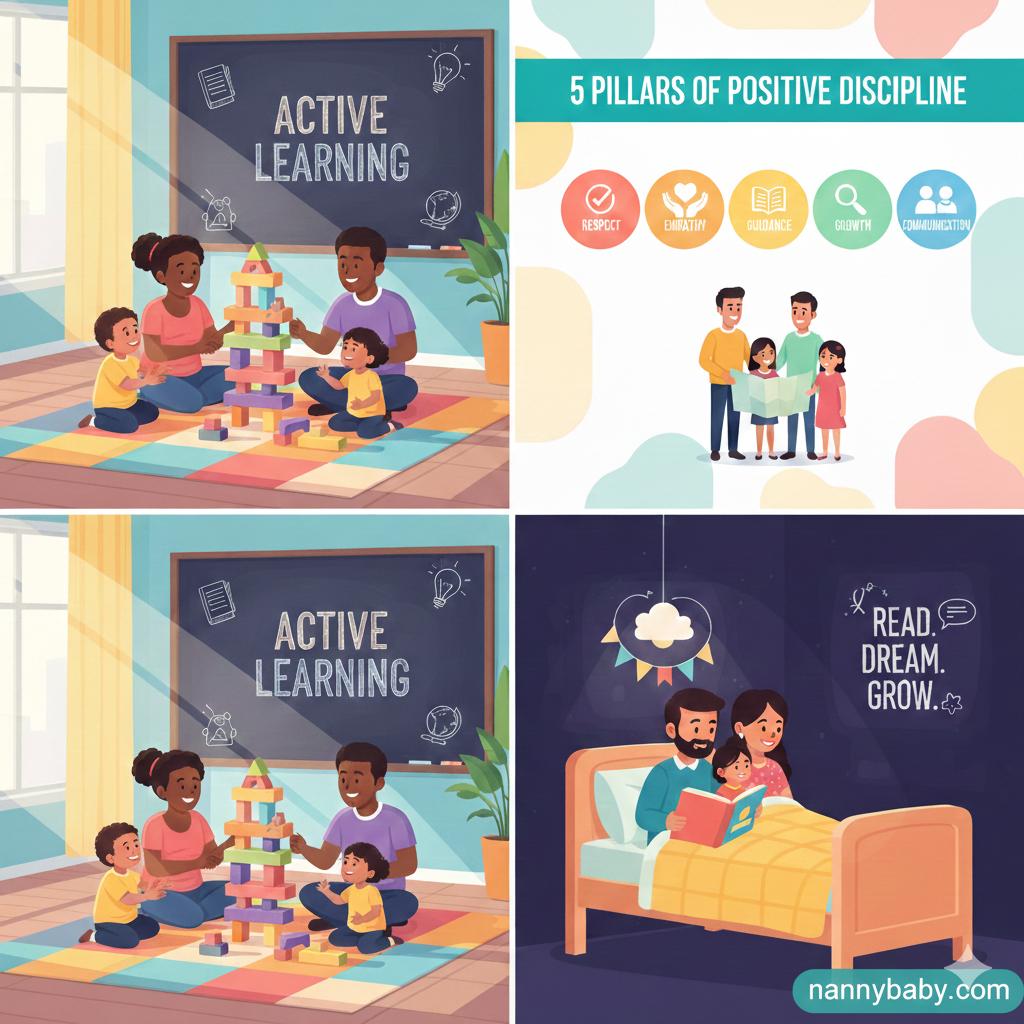
10. Make children feel safe, seen, calm, and supported, and challenged. These are the 4 pillars of active parent.
11. Love what they do, mean what they say, and do what they do are positive skills that parents should know.
12. If they hit or scream, only these things guide them on how to react: introduce them to positive strategies, set very clear expectations, and use calm communication, and provide them with solutions or choices. This is a pillar of active parent
13. If they don’t punish them like clarify, or get down to your child’s level and make eye contact, use a short silent pause before implementing logical consequences like taking away some privileges, and take time to show them respect or kindness as you want to see in your child as a copy.
14. Respond to them with immediate warmth. Avoid ignoring them. This builds trust.
15. Especially as soon as possible, bow or go to bed or make eye contact.
16. Introduce them to all family members. Don’t force them to manage the group, but help them to communicate.
17. Celebrate small tasks with praise like they play a new game, try a new food, finish a meal, share a toy and even encourage them by clapping or smiling.
18. Always set a consistent routine for playing, screen time, sleeping, etc. Consistency makes them responsible.
19. Reading colorful books or stories out loud to them can help them develop their language skills.
20. Give them freedom. Allow them to try new things safely. Make small attempts on their own. This will help them develop problem-solving skills.
21. Conceptual skills such as understanding concepts, making simple decisions or solving problems.
22. Learning daily skills such as feeding themselves, dressing themselves or cleaning themselves.
23. This process will build their confidence and make them feel safe when your child cries or needs something.
24. Provide them with a safe place where they can find themselves. This will strengthen or reinforce their independence.
25. Respect individual traits. Do not force your child to face a group situation. If they are shy, instead of doing this, offer them a new experience, or if they are energetic, continue their activities calmly.
26. They observe everything. You have to smile when you see a stranger. Stay calm and show patience. This teaches them how to survive in society.
27. Children want attention. Pay attention to them even if they are telling you stories.
28. Avoid labeling them. This can have a bad effect on their brain development.
29. Set screen time with boundaries.
30. Strengthen them mentally by giving them opportunities, such as encouraging positive self-talk, promoting emotional awareness.
A child’s personality is not fixed at birth; it is developed by your attitude, active parent or the way you treat them. It develops with your support, your time invested in creating a bright or balanced future for them. As a mother, I learn that a child’s positive personality starts to from the little things in everyday life, like how we treat them, how much love, active parenting and patience we have.
Note
All these tips that I have shared in this article are based on what really works for me. I noticed that my little one became more confident, positive, calm, and kind with these simple methods. I hope it helps you the same way they helped me. Let’s help other mothers by telling us what little things you have noticed that enhance your child’s personality?
Conclusion
And finally, active parenting is an investment. It entails the increased intake of energy, further waiting as well as talking. But the pay-off on the bet, a kid who not only believes in you, but respects him/herself, and understands how to work around the world, is worth it. It makes you a kind of parent who is able to listen to his or her child at the age of five so that when such a child reaches the age of fifty and begins talking to you, they do not get lost in words.
FAQS
1.Active vs. Passive Parenting: Which one is better?
Active parenting is participatory and involved; you are an instructor who draws lines and justifies the reason. Passive parenting is retaliatory and non-involved and it tends to leave the child on his/her own. Resilience is developed by active parents, and passive parents may make a child feel unsupported and anxious.
2.What is the impact of active parenting on Emotional Intelligence (EQ)?
The roles of active parents are those of emotional coaches. You can teach your child to label his feelings and cope with them by legitimising them (e.g., “It is okay to feel frustrated” etc.). It is based on this emotional literacy that empathy and self-regulation would be found in adulthood.
3.So, which are the most effective active measures of toddler behaviour?
Be focused on decisions and reliability. Natural consequences are to be used instead of shouting. Make them have controlled independence by asking, “Would you rather wear blue or green jumper? This eliminates power struggle and develops confidence in them.
4.What is the way to keep busy working parents active?
It is not the Quantity, it is the Quality. Utilise micro-moments: such as the 10-minute commute to school into a phone-free time to have a meaningful conversation. Even minor, devoted communication makes a child experience that she/he is prioritised over a hectic profession.
5.Do active parents cut screen time among teenagers?
Yes, in Collaborative Agreements. Rather than simply prohibiting phones, engage your adolescent in the establishment of the house rules. They will be more likely to adhere to them when they feel respected and feel that they have a say in the digital boundaries.
6.What is the importance of Active Listening?
Active listening involves listening to get a response and not to respond. Once you put your phone down and look into their eyes you are sending them the message that what they think is not in vain. This forms a rapport bridge that extends to their teens.
7.What to do in order to adjust active parenting to neurodivergent children?
Dwelling on Strengths-based parenting. Visual schedules and clear calm instructions should be used. Active parenting in this case is being a supporter of a child having a special way of thinking instead of making him/her fit in a general mould.
8.Is active parenting beneficial on school grades?
Indirectly, yes. You create a Growth Mindset by complimenting hard work (e.g., saying that you love how hard he studied). With the support of children at home, they are less afraid of failure which results in improved academic performance.
9.Active Parenting and helicopter parenting What is the difference?
A Helicopter Parent removes the issue of the child failing. An Active Parent provides the child with means to solve the problem by themselves. One dependence and the other independence.
10.What are long term psychological gains?
Active parenting is usually accompanied by elevated self-esteem and reduced anxiety levels among children. Being raised in a safe, approved world provides them with the emotional armour that they will require to cope with the pressure of the adult world.
Leave a Reply