
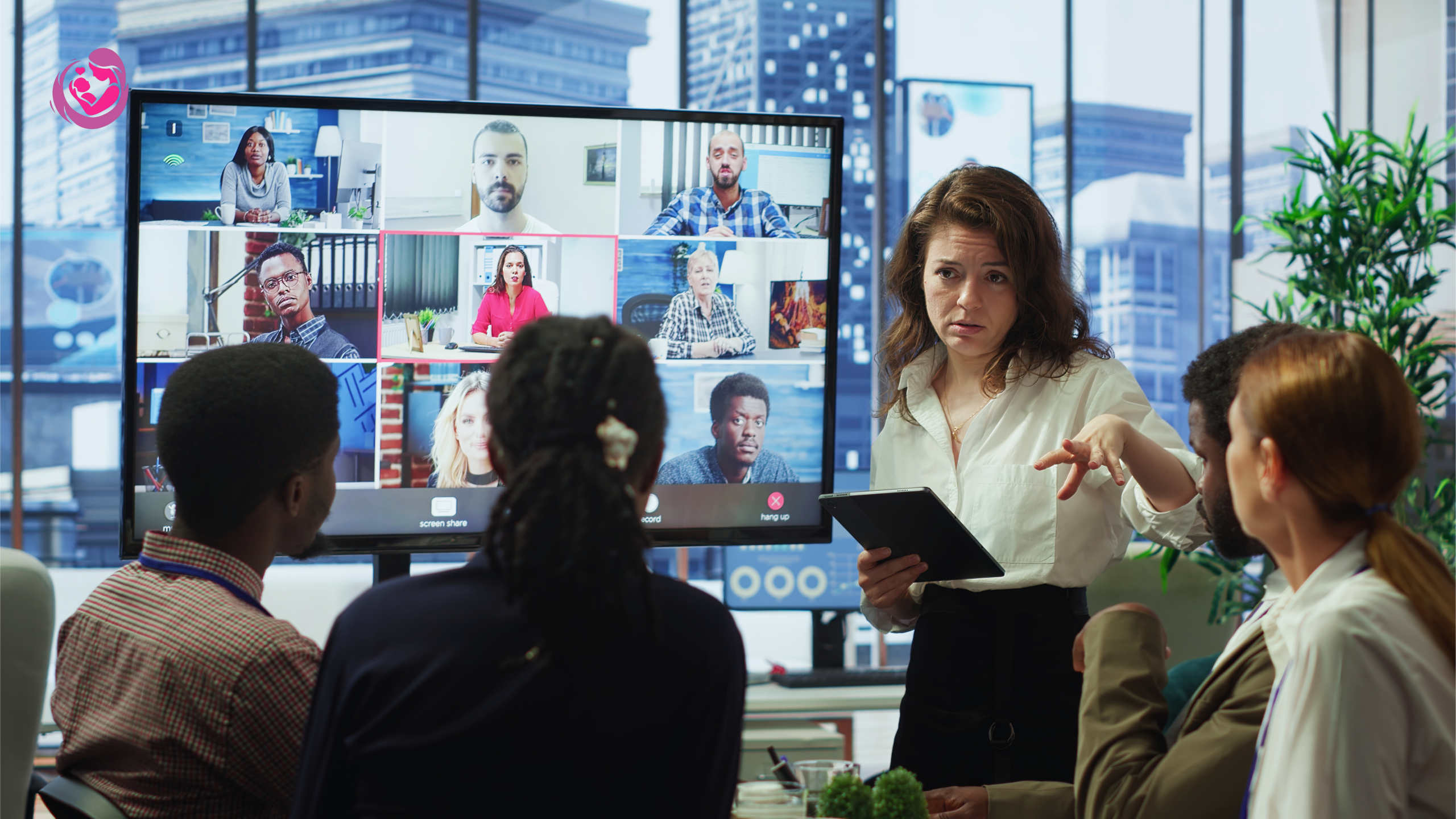

Introduction of virtual meeting etiquette
In the modern global business environment, especially in the competitive business world of the United States, your online presence has technically become your major business identity. The shift of the physical boardrooms into digital interfaces was initially an obligation on a short-term basis, and now, it has become a long-term staple of international business. In our time of living, virtual meeting etiquette has not only become a set of nice recommendations, but also an essential skill of leaders, creators, and collaborators.
We are at the crossroad of technology, social intelligence and psychology when we talk about the specifics of the way people behave on the Internet. This guide is an all-encompassing handbook of the contemporary professional who needs to have the art of the digital meeting mastered so that every connexon strengthens his/her authority and enhances a sense of true connexion.
What is Virtual Meeting Etiquette?
To establish the virtual meeting etiquette one needs to consider much more than the mechanics of clicking the link or muting the microphone. Fundamentally, this science is the art of maintaining one’s career and social interactions using the digital platform. The structure of actions is what makes a virtual interaction as fruitful, decent, and human-centred as a face-to-face one.
The culture of efficiency, the philosophy that time is money in the United States is highly valued in the professional culture. Thus, the virtual meeting etiquette in a US setting is favourable to the point of eliminating friction as much as possible. It includes all the physical appearance you welcome as well as the online sanitation of your computer preferences. It is the establishment of an environment in which the technology can be made invisible so that the real work, which is the ideas, the strategy, and the relationship building can be brought into the limelight.
The absence of a set of rules of conduct in virtual meeting etiquette spaces leads to digital fatigue very soon. The mental aspect of processing delayed audio, reading stifled body language and dealing with distractions in the environment is usually the cause of this fatigue. Strict virtual meeting etiquette will help us and our colleagues to reduce this cognitive load, so our sessions will be shorter and more productive.
Wearing Etiquette: The Basics of Being a Pro
The basics of general meeting etiquette have to be internalised before one can master the rules of the virtual realm. These are the eternal principles of professionalism that have been leading the business of high level decades. These principles do not transform in the virtual meeting etiquette, they are just exaggerated.
The concept of The Gift of Time is the most important pillar. By asking five people to attend a one hour virtual meeting etiquette you are not spending an hour of human capital but five hours of human capital. According to professional etiquette, it is the capital that should be handled with extreme caution. This commences with the making of a well-organised agenda. An agenda is a contract intended. It informs the participants that their time is being honoured and that there is a definite place that the conversation is heading.
Moreover, the premise of virtual meeting etiquette is based on the idea of active presence. With a brick-and-mortar office, it is simple to determine when a person is occupied. In a virtual world, interaction has to be specified. That is, learning to listen radically, or in other words, one should listen attentively to the speaker even when you are not on camera. It is the ability to know who should be leading or facilitating the discussion, depending on the hierarchical nature of the discussion. In the US where straight to the point communication is the most appreciated, brevity and being able to stay on point is the utmost form of professional respect.
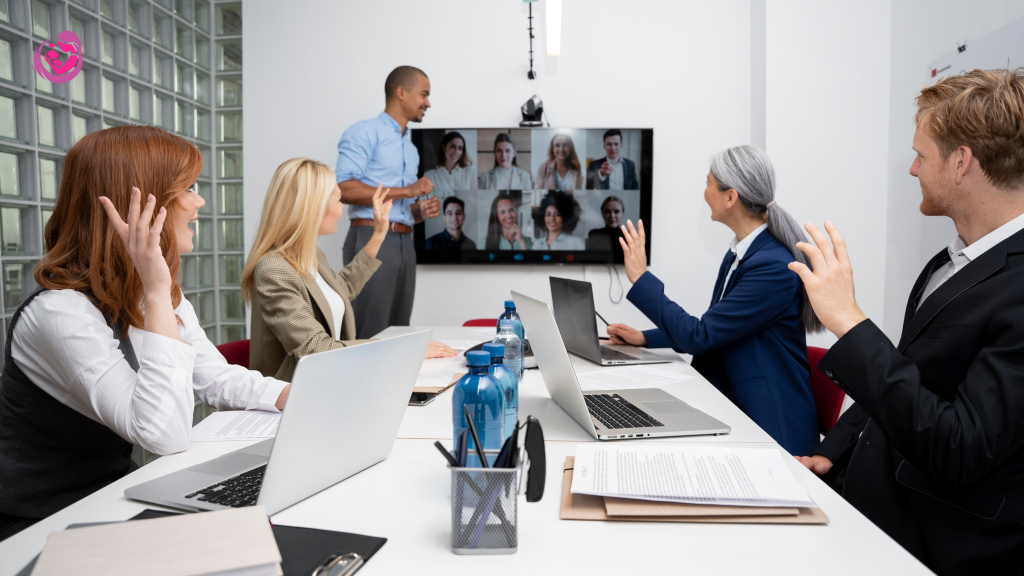
virtual meeting norms
Due to the maturation of remote work, a repertoire of virtual meeting etiquette has established itself in the world of industries. Such norms serve as the social glue holding the distributed teams together. The transition to the intentional visibility is one of the most important changes that we have observed.
Several years back, it was the default to have a camera off among many. The new standard today has been changed to defaulting to Camera-On to most collaborative sessions. This is due to the fact that human beings are visually connected. Micro-expressions are what we seek to understand agreement, scepticism, or enthusiasm. By keeping one of the participants a black box on the screen, he or she unconsciously places a barrier to trust.
Nonetheless, even an advanced knowledge of the virtual meeting norms understands the concept of Zoom fatigue. The notion of declaring that it is a No-Camera Friday or it is even now permissible and even encouraged to go off camera during an extended data-heavy presentation where the screen share is the focal point is becoming a commonplace.
The other emerging standard is the digital first attitude towards documentation. Previously an individual could make notes on a legal pad. The contemporary rule is that the notes must be made in a collective, real-time document with everyone present watching what is being happening at the meeting. Such a degree of openness minimises the number of meetings which resolves confusion after the meeting and records the new findings being discussed at that time.
meeting rules of etiquette
In keeping the high-performance environment, the professionals should follow certain rules of virtual meeting etiquette that will rule the mechanical part of the interaction. These guidelines are aimed at avoiding the most frequent traps that result into time wastage and professional humiliation.
The first one is the Two-Minute Buffer. In USA business society, reliability is displayed through punctuality. Getting on precisely at the start time usually ensures you are technically late, since you can either get a software update or a microphone issue. The reason is virtual meeting etiquette which states that you must be in the room and be ready to participate at least sixty seconds before the actual start.
The second, which is not easily followed, rule concerns the Auditory Environment. Although we have now been increasingly lenient about the background noises that happen now and then, the adage goes that your sound quality is how your professionalism is measured. Acquiring a special microphone or a good-quality headset is no longer a luxury of those who are in positions of leadership. It is an indication that you are attentive to the clarity of your message and comfortable ears of your listeners.
It is also important to have the rule of Visual Backgrounds. There is a storey in the space behind you. Although you do not have to have a museum-quality office, a cluttered bed or a busy kitchen in the background may will away your expertise. The rule here is simplicity. When you do not have a professional appearance due to your physical setting, the norm is a high-quality blur effect or a branded corporate background.
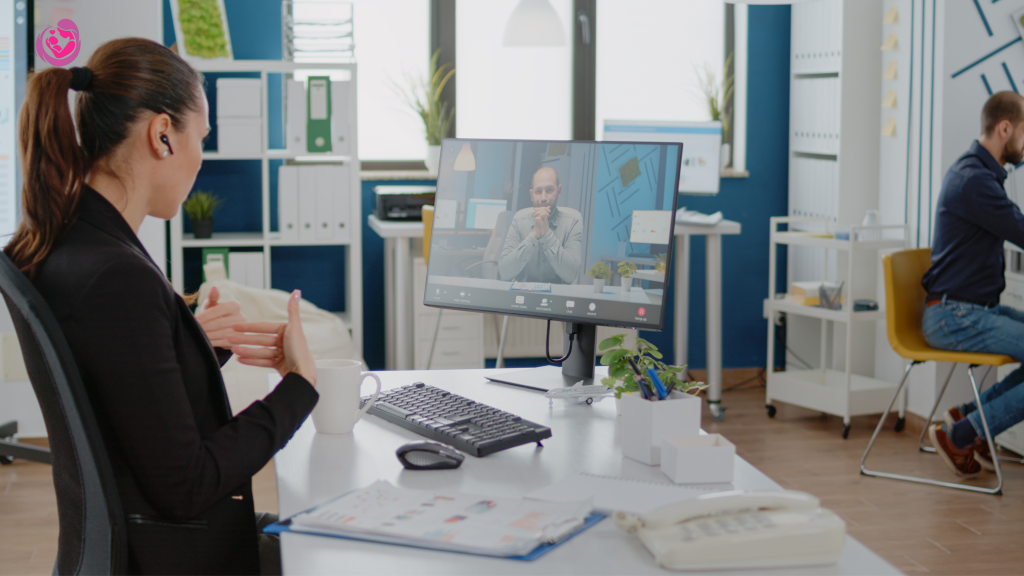
online meeting etiquette
Although the fundamental rules are identical, the virtual meeting etiquette of an online virtual meeting etiquette can be a bit different based on the platform; Zoom, Microsoft Teams, or Google Meet. All platforms have their language of interaction functions which you need to master.
As an example, the courteous way of using applications such as Microsoft Teams that is in high integration within the enterprise workflow is using complex features of Threads and Channels after the meeting. The virtual meeting etiquette on Zoom may be more concerned with the utilisation of Breakout Rooms and the Raise Hand function.
The most significant element of the platform-specific virtual meeting etiquette is the control of the Chat option. The chat must not be a distraction, but a secondary information flow. It is the best opportunity to leave links to the resources, to spell complicated names, or to use so-called Plus-One (a gesture of agreement) without disturbing the speaker. Nonetheless, side-barring, or making personal, unrelated talks with certain colleagues during the general meeting, is viewed as very unprofessional and a violation of the rules of online virtual meeting etiquette. It is the online equivalent of mumbling in someone’s ear as a presenter is talking.
Moreover, screen sharing should have its own rules. The most vital thing to do is to close any unrelated tabs before you share your screen; however, private emails or internal messaging applications, such as Slack, come to mind. The degree of risk involved in sharing your entire desktop is high, the professional norm is to share only that application window needed to make the presentation.
High-impact tips of virtual meeting etiquette
To take their leadership to the next level and become leaders with high impact rather than just competence, the following specific virtual meeting etiquette tips might be helpful in the desired direction. These are the nuances that cause the difference between an average participant and the person that is an authority figure.
Among the strongest ones is the “Lens Alignment” tip. The human mind usually takes a glance through the faces of those displayed on their screens. But to those who are not involved, this appears that you are staring down or aways. In order to produce the appearance of looking straight into the camera, you have to practise looking straight into the camera lens during a conversation. This brings some form of psychological connectedness and straightforwardness which is needed in persuasion.
The other tip is the Lighting Triangle. When the source of your light is behind you (as in a window), you will come out as a silhouette, and this may be untrustworthy or ominous. The most professional configuration is to have a soft source of light behind your camera which is faintly lit up to make your face even. This will make sure that your facial expressions, which is the most powerful communication device is fully visible.
Also, there is the Two-Second Pause. The latency inherent in digital communication prevents people from being able to jump in immediately someone has finished talking and accidentally interfere. Waiting two seconds will also be able to guarantee that the other party is indeed through with their thought and that you are allowing the software time to catch up. Such minor behaviour renders the whole discussion more balanced, considered, and respectful.
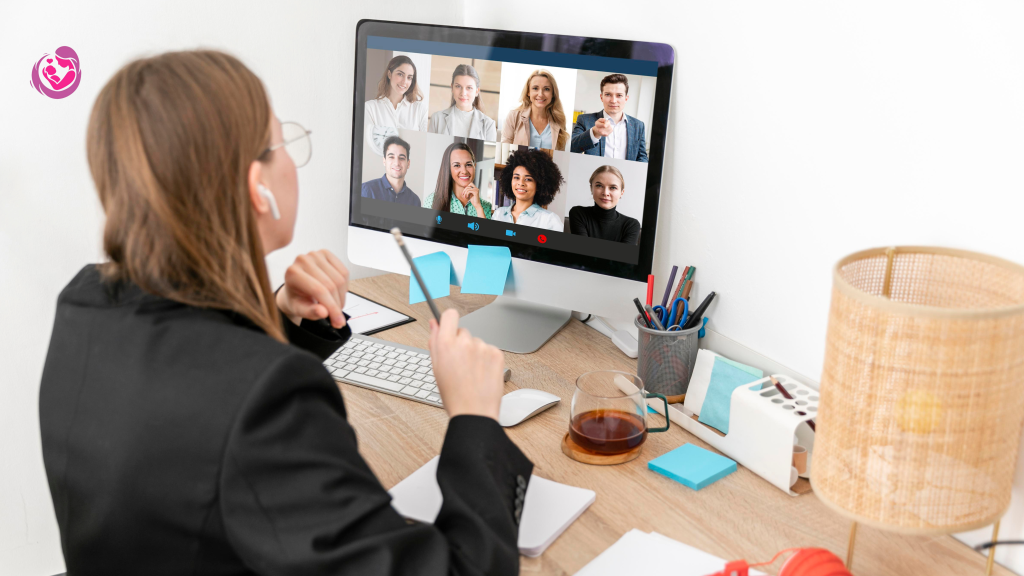
participate in a virtual team meeting to discuss new findings
With the goal of attending a virtual meeting etiquette to address new findings, virtual meeting etiquette stakes are greatest. This is the point at which information should be converted into light and in which your capacity to control the digital room should be the one that defines success of the project.
The “Etiquette of the Speaker takes the centre stage in this case. You are presenter, not a participant, when it comes to bringing forth new findings, you are a steward of information. Preparing the stage: I will have my screen up to display the data of the Q3, then I will give three minutes of questions. This single signposting enables your audience to have a sense of relaxation and concentration on the information instead of having to wonder when he or she will get the opportunity to speak.
It is also your task to make inclusivity during the discussion of new findings. Extroverts tend to control most of the airtime in a virtual meeting etiquette setting and the introverts or those in another time zone may not find a slot. High level virtual meeting etiquette entails proactive attempts to take the view of the quiet ones. Somebody might say, we have not yet heard back about these findings by the engineering team, David, what do you think off the first about the viability of these results? This makes the virtual meeting etiquette more of a collaboration and not a monology.
Unless a specific label is clearly placed on it, such as a Working Lunch or a Coffee Chat, eating in front of the camera is distracting. The sight of a person eating is unprofessional even when you are on mute. In case you desperately need to eat, switch off your camera during those few minutes and inform the host in the chat that you need to take a short break but is still listening.
Norm in the USA is Grace and Brief Acknowledgment. When a child enters a room or a dog barks, then do not go hysterical. Quickly admit it–excuse me, it’s my new assistant barking–turn
FAQ
To ensure this guide is as helpful as possible, we have compiled answers to the ten most pressing questions professionals have regarding digital conduct.
1. Is it considered rude to eat during a virtual meeting etiquette if I am on mute?
Generally, yes. Unless it is specifically labeled as a “Working Lunch” or a “Coffee Chat,” eating on camera is distracting. Even if you are on mute, the visual of someone eating can be unprofessional. If you absolutely must eat, turn your camera off for those few minutes and let the host know in the chat that you are stepping away briefly but are still listening.
2. How should I handle an unexpected interruption from family or pets?
The modern standard in the USA is “Grace and Brief Acknowledgment.” If a child enters the room or a dog barks, do not panic. Briefly acknowledge it—”Apologies, that’s my new assistant barking”—mute yourself, handle the distraction, and return to the conversation. Over-apologizing often causes more of a distraction than the interruption itself.
3. What is the proper “Hand-Raising” etiquette?
Use the digital “Raise Hand” feature provided by the platform rather than physically waving your hand in front of your camera, which can be missed if the host is looking at a screen share. Once you have been called on and have finished speaking, remember to “Lower” your digital hand immediately to avoid confusion.
4. How do I decline a virtual meeting invitation that I feel is unnecessary?
Professionalism requires a proactive response. Instead of just hitting “Decline,” send a short note: “Thank you for the invite. Looking at the agenda, I believe my input can be handled via email to save everyone time. Please let me know if there’s a specific section where my presence is vital.”
5. Is it okay to use my phone for a virtual meeting?
Only as a last resort or if you are in transit and only need to listen. Joining a high-stakes virtual meeting etiquette from a phone often results in “vertical video,” poor lighting, and shaky audio, all of which detract from your professional authority. If you must use a phone, use a tripod to keep the image stable.
6. What is the etiquette for “Dress Codes” in a remote environment?
The standard rule is to match the culture of your organization, but when in doubt, “dress one level up.” If your team wears t-shirts, wear a polo or a nice sweater. For US-based client meetings, a professional blouse or button-down remains the gold standard, even if you are wearing sweatpants off-camera.
7. How do I gracefully deal with technical issues like a freezing screen?
Always have a “Plan B.” If your internet is unstable, have your phone ready to join as a backup audio source. If you freeze, wait a few seconds for the connection to reset. If it doesn’t, leave the meeting and rejoin immediately. If the problem persists, send a quick message to the host via another channel so they don’t wait for you.
8. Should I use the “Blur Background” or a “Virtual Background”?
A blurred background is generally preferred as it looks more natural and less “distorted” around the edges of your head. virtual meeting etiquette backgrounds are excellent for branding or if your physical space is truly distracting, but ensure you have a high-quality camera so the “masking” effect doesn’t make you look like a flickering ghost.
9. What is the etiquette for recording a meeting?
You must always ask for permission before hitting the record button. State clearly why you are recording (e.g., “for the team members who couldn’t make it”) and ensure everyone is comfortable with it. In many US states, recording without consent can also have legal implications.
Leave a Reply