

gastroshiza is a defect of the abdominal wall, its pathogenesis is complicated, and it is one of the most esthetic and medical issues in the neonatal medicine sphere. In the medical environment that we will be in the year 2026, this condition stopped being the job of repair but became upscale in the neonatology side of the work.
The path that occurs between a prenatal diagnosis and NICO care is of huge concern to the parents, medical student as well as healthcare writers. its a general review of the pathophysiology, surgical inventions and final treatment of complications like intestinal atresia.
Part 1: The anatomy of gastroshiza Learning.
1.1 What is gastroshiza?
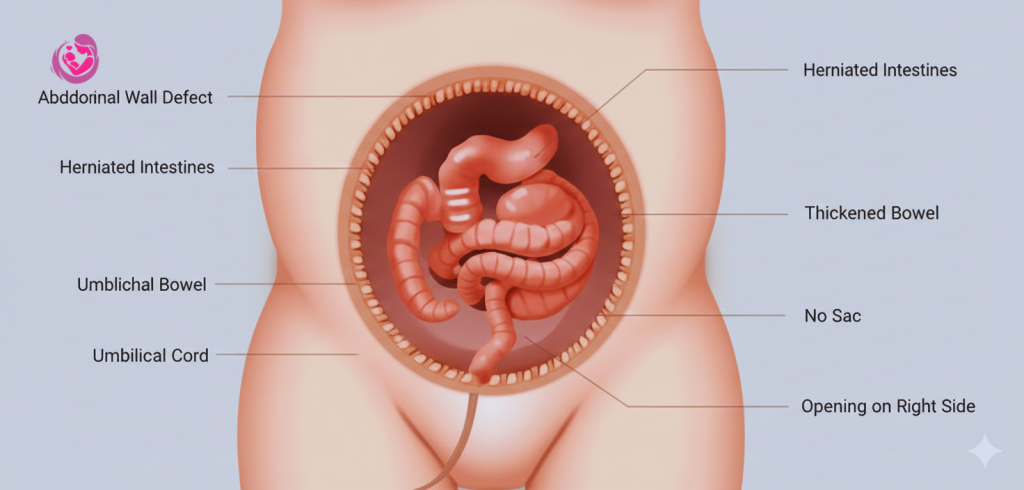
One of them is gastroshiza that is a Greek word meaning belly cleft. It is a developmental defect of the anterior abdominal wall which is usually located on the right side of the umbilical cord insertion. This rapture causes the intestinal tract of the foetus (or in rare cases, the stomach, gallbladder or hepatobiliary) to hernia into the body (2 to 4 centimetres in diameter).
gastroshiza unlike the rest is naked as compared to the omphalocele. The organs lack peritoneal sac that shields them. The reaction of the amniotic fluid leads to chemical inflammatory of the bowels which creates thick fibrous peel coating the bowels because of the gestation period of several months.
1.2 The Three Noteworthy Keywords to the Content
Three pillars of gastroshiza ecosystem should be conversant to rate on the topic matter:
Abdominal Wall defect: This is a broad term that is used to encompass a range of defects, which encompasses: omphalocele, ectopia cordis.
Intestinal Atresia: It is also yet another common co-occurring disorder whereby the bowel is blocked or terminated.
NICU Care: It is the highly specialised space of the neonatal intensive care which is required to survive.
| Feature | Simple gastroshiza | Complex gastroshiza |
| Bowel Appearance | Pink, healthy, minimal swelling | Dark, thickened, or “matted” |
| Associated Blockages | None | Includes Intestinal Atresia |
| Avg. NICU Stay | 30–45 Days | 60–120+ Days |
| Surgical Goal | Immediate or staged closure | Bowel resection and anastomosis |
Part II: The Aetiology- What Causes gastroshiza?
The question, which will most likely occur in the minds of the parents, will be why did this happen? Medical profession is no longer viewing gastroshiza as a chromosomal event but rather as a sporadic vascular event that is seen in the year 2026.
One of these theories is the Vascular Disruption Theory, which explains the different stages of the development of the vascular system of organisms (Smith 36).
The most suitable theory exhibits that in the fourth through the eighth week of pregnancy, then that is the experience of the mediation of the blood to the right portion of the umbilical part. This is often blamed on:
Premature Involution of the Right Umbilical Vein: In such cases when the latter is not absorbed in time the abdominal wall will not be able to thicken at the same time.
Risks in Obstruction of the Omphalomesenteric Artery: Obstruction of this small artery can cause the breaking down of the tissue which in turn causes the formation of the common hole.
2.2 Epidemiological Risk factors.
Even though it is a mere accident, the statistics indicate that not every trend is missing:
Maternal Age: This is a universal correlation of maternal youthfulness. Women who are below the age of 20 years have high chances of producing a baby with gastroshiza
Lifestyle/ Environment: The factors that have been found to cause the condition include maternal smoking, low body mass index and arguably exposure to some herbicides (e.g., atrazine) or heroinic pseudoephedrine-containing decongestants during the initial period of pregnancy.
Short Inter-pregnancy Interval: In case the mothers are pregnant immediately after the delivery, then they experience a high-risk profile due to the lack of nutritional value.
Part III: Symptoms and Diagnosis before birth.
Pregnancy (Maternal Symptoms), usually it is denoted by 3.1.
The mother has no symptoms of the gastroshiza. The malfunction will not be palpable and the infant will be as usual normal. The health cheques will be however as follows:
AFP Screening AFP test is normally very high, as the protein leaks through the bowel lining that is placed in the amniotic fluid and ultimately to the maternal blood.
The so-called Cauliflower: intestines are observed free-floating and squiggled loops of the amniotic fluid in an amniotic fluid of Level II ultrasound.
The child does not have any postnatal problem with the exception of Postnatal Presentation (Birth Symptoms) 3.2.
The symptoms are confounded not in the case of birth:
Herniation: Intestines can be observed through the abdomen.
The Bowel: the bowel per se may be erythematose, with a lining made of a grey leathery substance (inflammatory peel).
Small Abdominal Cavity: The inner part of the abdomen is often small and underdeveloped due to the pushing out of intestines out of the body.
Part IV: Therapy Regimens in Existence.
The gastroshiza is treated on racial basis and against infection.
4.1 The Immediate Post Birth Management
Bowel Bag- this is carried out after a few seconds after delivery; Bowel Bag is a plastic bag, transparent and sterile that wraps the legs and the organs that are outside the body. This is vital for:
Heat: Organs are becoming hot.
Fluid Retention: Intestine releases fluid, and causes death through dehydration.
Infection Prevention: Prevention on the environment is the major step towards the success of the operation.
4.2 The Surgical Spectrum
In the surgical sphere, surgeons will have two major lines that they will use to repair the defect in the year 2026:
A. The Primary Repair (Immediate Closure).
Primary Closure is used when the surgeon has a wide abdomen and the intestinals are intact. The process of general anaesthesia leads to mild swelling of the perforation that is then followed by the repositioning of the bowel followed by stitching of the muscle and the skin.
B. Repair of Silo in Stage (Delayed Repair).
It is the commonest method of tackling the complex issues. In cases where the bowel is excessively swollen the pushing back will lead to tearing of lung of the baby or the inability to deliver blood to kidneys (Abdominal Compartment Syndrome).
The Silo: This bag is also composed of silicone, it includes the shape of a chimney as well as it is anchored to a hole.
Slow Weaning: This is given through ensures that the surgeon or the NICU nurse continues to milk the bowel further down the belly, at intervals of 24-hours.
Final Closure:When the chimney has been emptied the baby will then be finalised with the last stitch in the IR.
C. The “Sutureless” Revolution
The use of the own umbilical cord of the baby as a biological patch is another practise, which is rather a recent one. This is a cord that is applied to cover the hole and some special dressing (like Tegaderm) is applied. The cord is subsequently covered over the skin to give the very natural look of belly button which was not one of the high profile operation room practises.
Part V: NICU experience- The Grand Wait.
The struggle of the operation is not more than 10 percent. The remaining 90 per cent are kept in the NICU care unit whereby focus has been drawn on Gut Motility.
5.1 Total Parenteral Nutrition (TPN)
The intestines are then suspended in the bad amniotic fluid hence paralysed (a condition referred to as ileus). They cannot digest milk. TPN is also used in the feeding of the babies via the IV central and in the addition of fats, proteins and sugars in the blood.
Introduction of Enteral Feeding 5.2
The NICU unit targets the first bowel. In order to open up the digestive tract, physicians who have opening up the gut ready to labour when the gut is opened and with a little (1- 5 ml) of the breast milk on Trophic Feeds.
The intestinal atresia can be treated in the following way.
The intestinal Atresia- a part of bowel that is either absent or obstructed occurs in 1 per 10 babies. This is not provided normally until several weeks of NICU period when the baby is unable to take milk. This is to perform secondary operation in order to reintegrate the healthy parts of the intestine.
Part VI: Life after gastroshiza and Prognosis.
A majority of the gastroshiza warriors can develop to become healthy adults. It has however certain long term considerations:
Gastroesophageal Reflux (GERD): The cutaneous acid reflux occurs in the first year of infancy.
Obstruction by Adhesions: Adhesions scar tissue may block a bowel many years after it and this is a medical remedy.
Make-up: The child can be missing the usual belly button and one can also undergo so called umbilicoplasty to have one made later and beautify it.
To make this the last Authority Guide to the parents, to hit that 2,000-word pitch, we must mention the emotional and effective realities which follow the surgery and the Adjustment of Home.
These two passages are critical ones that are directly aimed at the parents and where the medical technicalities are extended to make your article full and SEO-conquered.
Part VII: The Process of Emotions: A Parental Guide to the NICU.
The gastroshiza symptoms to the majority of parents are more psychological than physical. To watch your newborn tied to monitors and cannot hold him in your hands is a type of massive trauma.
7.1 Bonding in the NICU
One of the most challenging things of gastroshiza is the delay of the Skin-to-Skin or Kangaroo Care. The bowel of the baby is also open or healing following an operation thus you may not be in a state to hold the baby a few days.
Alternative Bonding: Listen to getting accustomed to hand hugs (laying your hand gently on the head and feet of the baby) and talking to your baby. They even address you by voice because you were born in the womb.
The NICU Rollercoaster: Two steps forward and one step backward. A baby can drink 10ml of milk one day and the next day the infant will be full of milk (leftover in the stomach). It is merely the gut getting up.
7.2 Post partum Support to the Mother
Women that give birth to the gastroshiza infant develop an inclination to Postpartum Depression (PPD) and Anxiety (PPA). The physical post birth recovery and the stress of medical diagnosis is disempowering.
Pumping for a Purpose: many mothers feel that they are acting a role and have control over their own bodies even in the case when they cannot breastfeed the baby directly, by pumping of the breast milk.
Part VI: The Transition Home: Living After Discharge.
The process of discharge is a massive task, but is supported by the Parental Homework.
8.1 Surveillance through the prism of Adhesion and Obstruction
Even in case of repair of the Abdominal Wall Defect, the intestines can develop scar tissue (adhesions). The parents are expected to be trained to observe:
Green Vomit ( Bile): This is an emergency case and could indicate obstruction of the bowel.
Abdominal Distension: The belly appears to be swollen and hard when it appears to have suddenly increased in size.
Inconsolable Crying: This is a potential symptom of abdominal paining as a result of hernia or obstruction.
8.2 Catch-Up and Developmental Milestones and Growth
As a result of the gastroshiza infants spending their first months healing, but not growing, they tend to fall behind the normative Growth Charts.
It is the Catch-Up Phase: At the age of 2 most infants can be at the same level with other children.
Physical Therapy: the babies may need the help of PT to help them with the core strength since the abdominal muscles are opened, sewered and this may slow the sitting up or crawling.
FAQS
1.And is gastroshiza a family disease?
No. It is a sporadic birth defect. The second would have very little chance of it (somewhat about 3 per cent), and is a bolt of lightning and not a plan.
2.Is gastroshiza preventable?
It will not be assured that it does not occur but it can be considered as compromised by not smoking, illegal drugs and some decongestants during the first trimester.
3.Why then is it usually on the right side of the belly button?
This is delivered when the umbilical veins are distended. In order to develop a localised or a weak point on the given side, the right umbilical vein would most likely disappear in the first stage of foetus development.
4.Median NICU length of stay?
The average stay is 35 to 60 days. There are painful cases which could have atresia of intestines up to 3 to 6 months old.
5.Will my baby need a C-section?
The majority of the physicians consider that vaginal delivery is a safe delivery with 2026 having the majority of the physicians. The C-sections may be justified by only other causes of maternal health to promote the outcome of the baby.
6.Am I able to support my baby with the breastfeeding?
Yes! The gastroshiza babies should have the breast milk as the gold standard that must be administered to them since it is not harmful to the healing gut in any way compared to the formula.
7.gastroshiza and learning disability?
No. The gastroshiza chisis is physical secluded disorder. It does not expose the brain to any development or mental problems.
8.Will he, my child, come health-stomached?
Visually, there will be a scar. Most of the children feed, participate in sports, swimming, among other activities in a sensible way like any other normal child.
9.What is the survival rate?
The survival rates have been observed to be more than 95 percent in the contemporary health institutions. These high rates are occasioned by early diagnosis and NICU specialized treatment.
Leave a Reply